
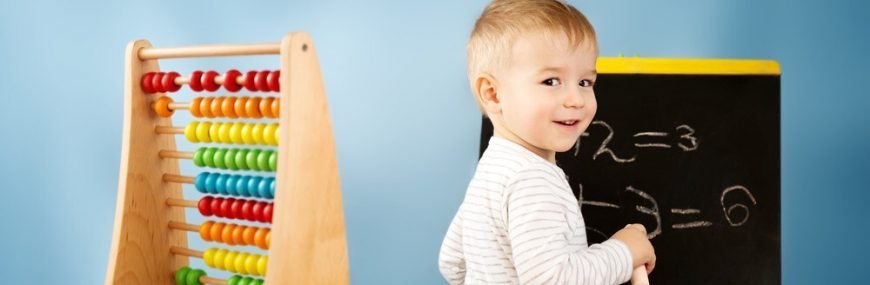
[vc_row][vc_column][vc_column_text]Unlocking innate potential to refine systematic reasoning through abacus than vedic math
A whip-smart mind is the need of the time. Young tots require the right calculated move to avoid staying bewildered with math. In this competent age, where automated solutions are on the rise, children hinge on digital devices to solve arithmetic problems and fail to acknowledge the ability of their mental calculation. A child’s mind is primed for learning, but it needs early experiences to wire the neural synapses of the brain. Hence, training the brain becomes crucial. The two wonder tools to fabricate and carve the brain are Abacus primary learning and Vedic Math. Calculations and number games are inseparable entities of our everyday life. Standard mathematical processes can be arduous and onerous at times. This can be dealt by the two alternate approaches that will help develop the child’s intuitive and innovative capabilities.
Fundamental algorithm of the vedic trick with explanations of use
Vedic mathematics has no admissible definition. It is a heritage in Indian mathematics tradition from the distant past. All the arithmetic analysis takes place mentally and is entirely accomplished in the mind. By using this method, one can obtain a quick and error-free result. The possibility of precision is more as the steps are smaller and limited in this method. The Vedic technique is a shortcut to cover all the corners and niche in the subject of mathematics, starting from basic calculations, trigonometry, calculus, geometry and astronomy. It has an extensive application area and teaches children to remember general concepts with comfort. The comprehension is honed to such an extent that many a time, sharp guessing of the answers is possible, without really doing the compound work. This conventional discovery can be made use of at later ages without any impediment. With heightened mathematical scope, these children get a strong boost for their mental agility and the burden of decoding problematic theorems with other polynomial functions can remain a stress-free task. Chiefly, vedic form can unlock the wisdom of math through nearly instant results.

Abacus as a mental computation tool for rapid topological thinking
Alternatively, on the other side, abacus math training is an appreciable calculation instrument that is incredibly useful and benefits in familiarizing math as a friendly subject. Once the kids are tutored appropriately using an abacus, they effortlessly accommodate visual indication and optical traits to handily crack topological problems. Abacus is a smart invention to build an appetite to bypass obstacles to learning and tune them to become lifelong learners with the propensity to implement and apply this to real-world situations. This gives them hands-on practical knowledge to refine their critical thinking skills and systematic reasoning by unlocking their innate flair.
Active use of abacus stimulates rapid, proportional and whole-brain advancement. This mental training method also supplements observation skills to process numbers and pictorial elements with just one look. Abacus classes are notable for continuously receiving favorable feedback from parents, peers and teachers. This educates the children to open up their logical thinking and become star achievers henceforward. Most children might repeatedly let out a plaintive cry when it comes to untangling mathematical functions, but this counting tool can change the course of your kid’s life. It wouldn’t be an exaggeration to say that once your kid undergoes training in abacus, he/she can actually perform elaborate and cumbersome computative problems within a matter of seconds, and that too faster than the calculator itself. This would ensure that the kid who used to shy away at the sight of digits can actually do it. Abacus math classes has its own usefulness in terms of broadening memory and motivating the mind to exercise it’s caliber.
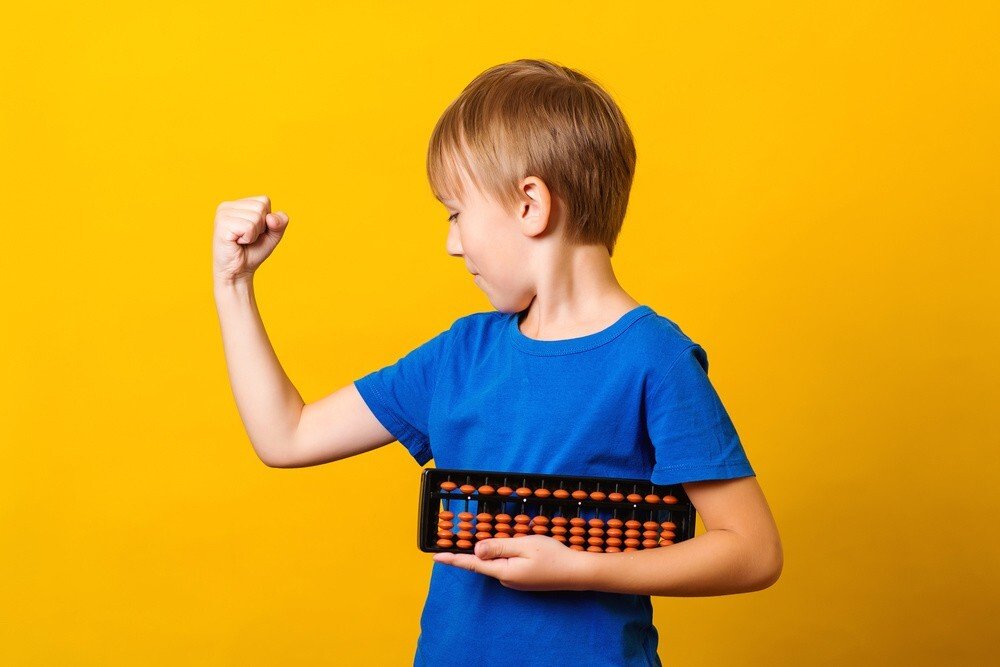
Abacus implementation is a smarter learning solution on algorithmic thinking when compared to Vedic math
Abacus and Vedic Math fits right into the modern day world for learning the subject of math in a convenient manner, nonetheless, they contain slight variations in their functionalities. They begin at the primary level by educating the numbers and then move along to calculations. The indicator in both methods is to execute them in our quotidian life through intensive practice. The lasting effect of the acquisition of both these approaches will support all the future learning experiences. The base of operation for both is mathematics. Abacus, being a concentration development program, motivates in sealing your knowledge in a multidimensional facet for forthcoming challenges whereas vedic math is only subjective towards mathematical development. Abacus primary learning is more coherent for achieving knowledge with a more engaged and pictorial method in the form of a kit that helps open the door for mental endurance. Although both are skill-based activities, vedic math holds a negligible position as abacus instruction consists of a unique combination of classic and contemporary methods and tools. It simultaneously synchronizes the brain waves and the auditory nerves. This solidifies the pathway to engage and expand the brain plasticity. Using functional resonance imaging, the numeral, spatial and verbal correlation is strengthened and wired for success. This control will allow the abacus learners to access the required and desirable brain wave pattern that is used for the learning process. Employing this core pattern through a carefully designed series of graduated calculation exercises, children are progressively trained to attain the optimal state of mind for the task at hand. The power of the mental abacus system comprises three key variables: difficulty of the problem, task duration, and the speed at which it must be accomplished. The right premotor stimuli of the encephalon along with the parietal areas process the numeral mental-operation and permits children to become abacus experts which will help them to instinctively speed up their computation. Vedic math eradicates the finger checking practice but while using the abacus, the beads are pushed up and down through several columns that bring about short transmission between the visuoperceptual and neurofunctional properties for real quick notation by maintaining the memory of the bead positions. Consequently, an abacus trainee has a slight superiority by visualizing a creative structure of learning rather than having to mug up a tedious math concept. The gamut of abacus lies outside the range of following a uniform restrictive principle directed only towards math.[/vc_column_text][/vc_column][/vc_row]